

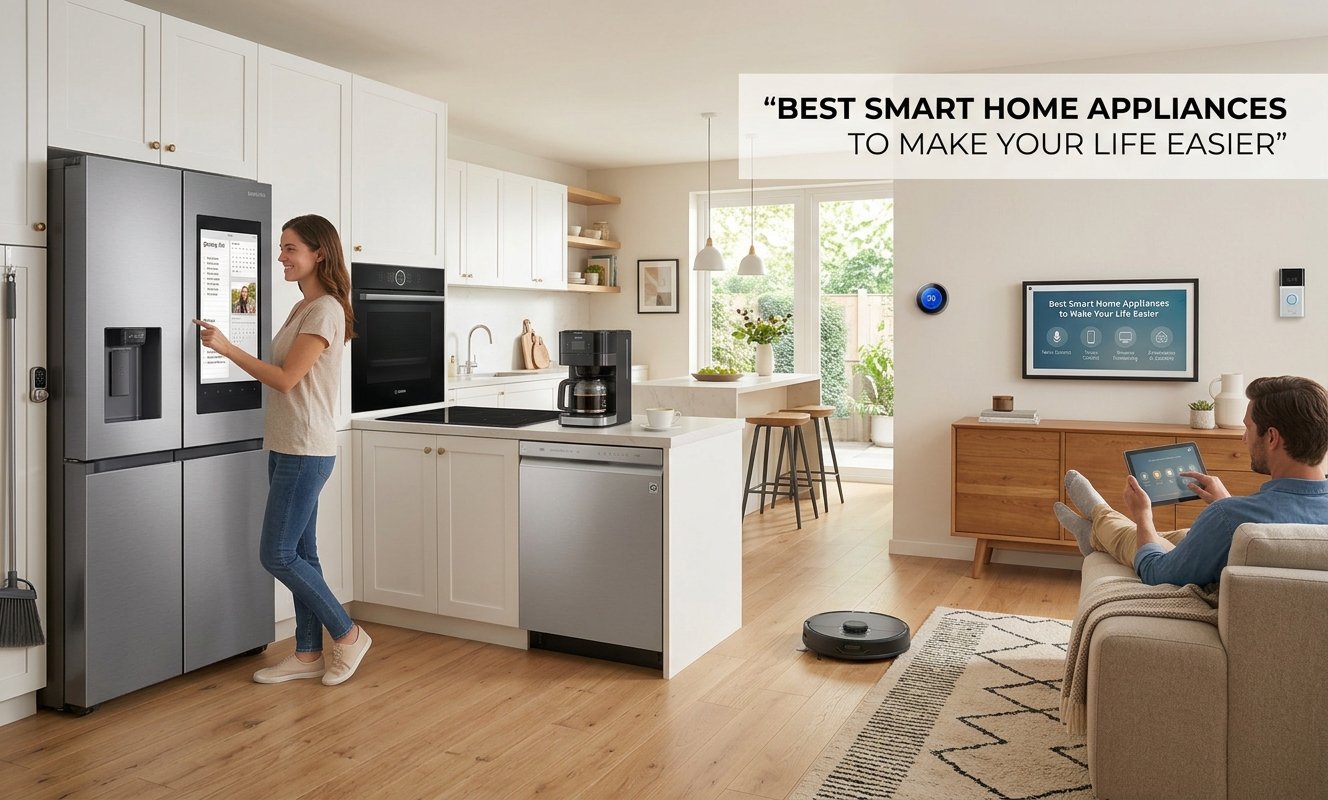
Smart home appliances are changing how people manage everyday household tasks. From controlling lights with a smartphone to scheduling laundry and monitoring food in a refrigerator, connected appliances can make daily routines more convenient and organized. However, the best choice depends on your budget, lifestyle, home setup, and the features you genuinely need.
Whether you live in a small apartment or a large family home, the right smart devices can help you manage household activities with less manual effort. Some appliances offer remote control and automated schedules, while others provide maintenance alerts, usage information, or voice-assistant compatibility.
What Are Smart Home Appliances?
Smart home appliances are household devices that use digital controls, sensors, software, or network connectivity to offer features beyond traditional manual operation. Depending on the product, users may be able to control settings through a mobile app, create schedules, receive notifications, or connect the appliance to a compatible smart home system.
How Smart Home Appliances Work
Smart home appliances generally combine hardware, software, and a control interface to perform specific tasks.
The process often works in the following way:
- Connect the device: Depending on the model, connect the appliance to Wi-Fi, Bluetooth, or another supported network.
- Configure the settings: Use the manufacturer’s app, a control panel, or a compatible smart home platform to set preferences.
- Create routines: Schedule selected functions, such as turning lights on at a particular time or starting a cleaning cycle when appropriate.
- Monitor activity: Some appliances provide status updates, alerts, or usage information through an app.
- Adjust when needed: Change settings manually or remotely when the product supports these functions.
Key Features of Smart Home Appliances
Smart appliances can offer several useful features, although no single device necessarily includes them all.
- Remote control: Manage supported functions through a smartphone or tablet.
- Automation: Schedule actions or trigger them under specific conditions.
- Voice control: Use a compatible voice assistant for supported commands.
- Notifications: Receive alerts about cycle completion, unusual activity, or maintenance needs.
- Energy monitoring: Review energy-use information when the device provides it.
- Smart home integration: Connect compatible products to a shared platform or routine.
- Software updates: Receive firmware or security improvements when supported by the manufacturer.
Best Smart Home Appliances to Make Your Life Easier
The best smart home appliances are not necessarily the most expensive or technologically advanced. They are the products that solve real problems in your daily routine.
Here are ten useful categories to consider.
1. Smart Refrigerators for Better Food Management
A smart refrigerator may offer connected temperature controls, door-open alerts, internal cameras, inventory tools, or maintenance notifications, depending on the model.
These features can be helpful for busy households that want to organize groceries and reduce unnecessary trips to the kitchen. Some models let users check selected refrigerator contents through an app, while others focus on temperature monitoring and basic connectivity.
Main benefits:
- Monitor selected settings remotely.
- Receive alerts when supported sensors detect a problem.
- Organize groceries using available inventory features.
- Access additional food-management tools on compatible models.
What to consider: Smart refrigerators can cost considerably more than conventional models. Internal cameras and inventory features also vary in usefulness, and an app cannot guarantee that food will remain fresh. Proper storage, safe temperatures, and checking expiration dates are still essential.
2. Smart Washing Machines for Convenient Laundry
Smart washing machines can make laundry easier to manage by providing connected controls and cycle notifications. Some models allow users to select or monitor supported wash programs through a mobile app.
Depending on the model, additional features may include cycle recommendations, maintenance alerts, remote monitoring, and notifications when a load is finished.
Main benefits:
- Check laundry status without repeatedly visiting the machine.
- Receive notifications when a cycle ends.
- Use supported wash programs and scheduling features.
- Monitor maintenance information when available.
What to consider: Remote operation may have restrictions for safety reasons. Some machines require users to prepare the load and enable remote control before starting a cycle. App functionality and connectivity requirements also differ between brands.
3. Robot Vacuums for Automated Floor Cleaning
Robot vacuums are useful for households that want to reduce the time spent on routine floor cleaning. Many models can move around a room, collect dust and debris, and return to a charging dock.
More advanced models may offer room mapping, scheduled cleaning, no-go zones, app controls, or automatic emptying. Some combine vacuuming with mopping, although their cleaning capabilities differ.
Main benefits:
- Schedule routine cleaning.
- Maintain floors between deeper cleaning sessions.
- Control cleaning areas on supported models.
- Reduce the need to operate a conventional vacuum for every small task.
What to consider: Robot vacuums may struggle with stairs, tangled cables, clutter, thick carpets, or certain pet-hair conditions. Models with mopping functions also have limitations and may not replace manual cleaning for stubborn stains.
4. Smart Thermostats for Temperature Control
A smart thermostat can help manage compatible heating and cooling systems. Depending on the model, Smart home appliances may support remote temperature adjustments, automatic schedules, occupancy sensing, and energy-use reports.
One practical advantage is the ability to adjust heating or cooling when it is unnecessary, rather than running the system at the same setting throughout the day.
Main benefits:
- Change temperature settings remotely.
- Create schedules for different parts of the day.
- Monitor selected heating and cooling information.
- Automate temperature adjustments using supported features.
What to consider: Compatibility is essential. Not every smart thermostat works with every heating or cooling system, and some installations require specific wiring or an adapter. A thermostat also cannot deliver meaningful savings if Smart home appliances is configured poorly or used with an unsuitable system.
5. Smart Ovens for More Convenient Cooking
Smart ovens and connected cooking appliances may offer app-based monitoring, cooking timers, temperature controls, recipe guidance, or notifications. These features can help people organize meal preparation, especially when preparing several dishes or following a specific cooking schedule.
Main benefits:
- Monitor supported cooking settings.
- Receive notifications when a timer ends.
- Use compatible cooking programs.
- Manage selected functions through an app.
What to consider: Remote features vary significantly. Some ovens allow monitoring but require manual confirmation before heating. Others restrict remote operation for safety reasons. Never leave cooking food unattended simply because an appliance has smart features.
6. Smart Dishwashers for Easier Kitchen Cleanup
A smart dishwasher may offer remote monitoring, cycle notifications, scheduling, maintenance alerts, or information about detergent and rinse-aid levels. These features can help households keep track of dishwashing without constantly checking the appliance.
Main benefits:
- Receive alerts when a cycle finishes.
- Monitor selected operating information.
- Schedule compatible cleaning cycles.
- Access maintenance guidance on supported models.
What to consider: Smart connectivity does not automatically mean better cleaning or lower water consumption. Cleaning performance depends on the appliance design, selected cycle, load size, detergent, and how dishes are arranged.
7. Smart Air Purifiers for Indoor Air Monitoring
Smart air purifiers can help manage indoor airborne particles by circulating room air through appropriate filters. Some models include air-quality sensors, automatic fan adjustments, app-based monitoring, and filter replacement reminders.
These functions can make Smart home appliances easier to track the appliance’s operation and maintain a regular filter replacement schedule.
Main benefits:
- Monitor available air-quality readings.
- Adjust fan speed automatically on supported models.
- Receive filter maintenance reminders.
- Control operating settings remotely when available.
What to consider: An air purifier’s effectiveness depends on its filtration system, clean-air delivery rate, room size, placement, and maintenance. Not every purifier removes gases or odors effectively, and air purifiers do not replace ventilation or eliminating pollution sources.
8. Smart Speakers and Voice Assistants
Smart speakers allow users to interact with compatible voice assistants. Depending on the platform, they may play audio, answer questions, set timers, create reminders, and control supported smart home devices. They can become a convenient central control point for a connected household.
Main benefits:
- Set reminders and timers using voice commands.
- Control compatible lights and other devices.
- Play music, podcasts, and other audio.
- Create supported routines for recurring activities.
What to consider: Voice assistants may misunderstand commands, require internet access for certain functions, or fail to control devices that use incompatible platforms. Some services and features may also require subscriptions.
9. Smart Lighting for Flexible Home Ambience
Smart bulbs, switches, and lighting systems can offer remote control, automatic schedules, dimming, and—in selected products—adjustable colors or color temperatures.
Main benefits:
- Control compatible lights remotely.
- Schedule lights to switch on or off.
- Adjust brightness on supported products.
- Create routines with other compatible devices.
What to consider: Smart bulbs may lose some functionality when their wall switch is turned off. Some systems require a hub, and certain switches need a compatible wiring setup. Color-changing features are not necessary for every room.
10. Smart Security Cameras and Video Doorbells
Connected security cameras and video doorbells may provide motion alerts, live video, two-way audio, night vision, or event recordings. These features can help residents monitor entrances and selected areas of their property, including when they are away.
Main benefits:
- Receive alerts about detected activity.
- View supported camera feeds remotely.
- Communicate through compatible two-way audio.
- Review recorded events when recording is available.
What to consider: Features such as cloud recording, longer video history, person detection, and advanced alerts may require a subscription. Performance can also depend on Wi-Fi coverage, power supply, lighting conditions, and the camera’s field of view.
Benefits of Smart Home Appliances
Smart home appliances can simplify household management, but their value depends on how well their functions match your needs.
Improved Daily Convenience
Remote controls and notifications can reduce unnecessary trips between rooms and make household tasks easier to monitor. For example, a washing machine notification can tell you when laundry is finished, while smart lighting can follow a preset schedule.
Better Household Organization
Schedules, reminders, and connected controls can help families coordinate everyday routines. A compatible smart speaker may manage reminders, while a connected refrigerator may provide selected food-management tools.
Potential Energy Savings
Some smart appliances can help reduce unnecessary energy consumption by adjusting operation according to schedules, occupancy, or user settings. Smart thermostats and efficient connected appliances are examples.
Remote Monitoring and Alerts
Certain appliances can report operating status, maintenance needs, or unexpected activity through an app. This can help users notice issues earlier, although an alert does not replace regular inspection or professional servicing when necessary.
More Flexible Home Control
A compatible smart home platform can coordinate several devices through shared routines. For instance, a single routine might adjust selected lights and a thermostat together.
How to Choose the Best Smart Home Appliances
Selecting the right appliance involves more than choosing the product with the most features. Focus on performance, compatibility, cost, and long-term usefulness.
Identify Your Household Needs
Start by deciding which task you want to simplify. If cleaning takes too much time, a robot vacuum may be useful. If you frequently forget to switch off lights, scheduled lighting could be a practical first step. Write down the problem before comparing products. This helps prevent spending money on features you are unlikely to use.
Set a Realistic Budget
Consider the total cost rather than the initial purchase price. Include installation, accessories, replacement filters, maintenance, subscriptions, and potential repairs.
A basic smart device that performs one task reliably may provide better value than a premium appliance with complicated features.
Check Compatibility and Connectivity
Confirm whether the appliance works with your existing phone, smart home platform, router, and household equipment.
Check whether Smart home appliances needs a separate hub, supports your preferred voice assistant, or requires a particular network configuration. If the internet connection is unreliable, investigate which essential functions remain available offline.
Compare Energy and Water Efficiency
For appliances such as refrigerators, washing machines, dishwashers, and air conditioners, examine verified efficiency information where available.
Look at the relevant energy label or recognized certification, operating capacity, and estimated running costs. Do not assume that a product is efficient simply because it has an app.
Review Privacy and Security
Connected appliances may collect information such as usage patterns, device status, voice interactions, or video recordings, depending on their functions.
Before buying, review the manufacturer’s privacy policy, account security options, software update commitments, and data retention settings. Use strong passwords, enable multifactor authentication where available, and keep the device’s software updated.
Consider Maintenance and Local Support
Check warranty terms, replacement-part availability, service options, and the manufacturer’s support arrangements in your country.
An appliance that is difficult to repair or expensive to maintain may not be a good long-term investment, even if its smart features are attractive.
Smart Home Appliances for Different Types of Homes
Different households need different combinations of connected devices.
Smart Appliances for Small Apartments
Small homes often benefit from compact products that save space and reduce repetitive tasks.
Useful options include:
- Smart bulbs or switches for scheduled lighting.
- A robot vacuum suited to the floor plan.
- A smart speaker for reminders and compatible controls.
- A compact air purifier sized for the room.
Prioritize devices that are easy to install and do not require extensive renovations.
Smart Appliances for Family Homes
Families may benefit from appliances that support shared routines and larger household workloads.
Consider a washing machine with useful cycle notifications, a suitable dishwasher, connected lighting, or a smart thermostat compatible with the home’s heating and cooling system.
Smart Appliances for Older Adults
For older adults who want simpler household management, useful options may include voice-controlled lights, accessible appliance controls, reminder functions, or selected security alerts.
Choose products with readable displays, straightforward setup, reliable manual controls, and appropriate privacy settings. Smart devices should support independence rather than introduce unnecessary complexity.
Smart Appliances for Busy Professionals
People with demanding schedules may benefit from scheduled cleaning, connected laundry monitoring, smart lighting routines, and remote temperature control.
Start with devices that save time on recurring tasks. Avoid building a complicated system unless its features genuinely improve your daily routine.
Are Smart Home Appliances Worth Buying?
Smart home appliances can be worthwhile when their features solve a real household problem, but they are not essential for everyone.
A connected device may offer good value if it helps you manage recurring tasks, monitor appliance status, or control compatible equipment more conveniently. However, a traditional appliance may be the better option if you rarely use remote controls or automated functions.
Before making a purchase, ask yourself three questions:
- Will this product make a regular task easier?
- Are its additional features worth the extra cost?
- Can I maintain and use it reliably over time?
If the answer to these questions is yes, the appliance may be a sensible investment. Otherwise, consider a simpler model and spend the difference on quality, efficiency, or durability.
Tips for Using Smart Home Appliances Effectively
Start With One or Two Devices
You do not need to automate your entire home at once. Begin with a device that solves an everyday problem, learn how Smart home appliances works, and expand your setup only when useful.
Create Practical Automation Routines
Use schedules that match your actual habits. For example, schedule selected lights to turn off at bedtime or set a compatible thermostat to adjust temperatures when heating or cooling is unnecessary.
Keep Software Updated
Install firmware and app updates from legitimate sources. Updates may provide security improvements, bug fixes, and new features, although support periods vary by manufacturer.
Replace products or reconsider their use when essential security support ends and no suitable alternative is available.
Protect Your Accounts
Use unique passwords for connected-device accounts and enable multifactor authentication where offered. Limit unnecessary permissions and review which household members or third-party services can access each device.
For cameras and voice assistants, understand the available controls for recordings, microphones, notifications, and stored data.
Keep Manual Controls Available
Smart home technology should make daily life easier, not leave you helpless when an app or network stops working. Learn how to operate essential appliances manually and check whether important functions continue during an internet outage.
Common Mistakes to Avoid When Buying Smart Home Appliances
Paying for Features You Will Not Use
Extra screens, advanced automation, and premium app features may sound appealing, but they do not always improve everyday performance. Choose features based on your needs.
Ignoring Compatibility
A device may not work with your current smart home platform, router, wiring, or heating and cooling system. Confirm compatibility before buying, especially for appliances that require installation.
Overlooking Ongoing Costs
Some connected appliances require subscriptions, replacement accessories, or specialized maintenance. Include these expenses when comparing products.
Assuming Smart Means Energy Efficient
Smart controls can help manage usage, but they do not automatically make an inefficient appliance efficient. Compare energy performance, capacity, and operating costs.
Neglecting Privacy and Security
Leaving default passwords unchanged, ignoring updates, or granting unnecessary account permissions can increase security risks. Configure privacy and security settings when setting up each device.
Automating Too Much Too Quickly
Complex routines can become confusing and may not behave as expected. Add automation gradually and test it before relying on Smart home appliances for important tasks.
Read more: Furniture Fair: Everything You Need to Know Before You Visit
The Future of Smart Home Appliances
Smart home technology continues to develop through improvements in connectivity, automation, sensors, and software.
More Connected Household Systems
Compatible products can increasingly coordinate selected functions across a household. Standards such as Matter are designed to improve interoperability among supported smart home devices and platforms, although not every device or feature is compatible.
More Context-Aware Automation
Some systems use sensors, schedules, or usage patterns to adjust their behavior. Examples include lighting that responds to occupancy or temperature controls that follow established routines.
Greater Focus on Energy Management
Connected devices can provide information about energy consumption and help automate selected activities. Smart thermostats, efficient appliances, and compatible home energy management systems may help households manage demand more effectively.
Continued Attention to Security and Privacy
As more appliances connect to networks, software support, secure accounts, transparent data practices, and reliable manual operation remain important considerations.
Consumers should look beyond new features and consider whether a manufacturer offers dependable updates and clear information about data collection.
Final Thoughts
The best smart home appliances to make your life easier are the ones that improve your daily routine without adding unnecessary expense or complexity. Smart washing machines, robot vacuums, connected refrigerators, smart thermostats, lighting systems, and other connected devices can offer practical benefits when their features match your household needs.
Before buying, compare performance, energy efficiency, compatibility, maintenance costs, privacy settings, and long-term support. Start with one or two useful devices instead of trying to automate everything at once.
FAQs About Smart Home Appliances
1. What Are the Best Smart Home Appliances for Beginners?
Smart bulbs, smart plugs, compatible speakers, and robot vacuums are common starting points. The best option depends on the task you want to simplify, your budget, and compatibility with your existing devices.
2. Do Smart Home Appliances Save Electricity?
Some can help reduce energy use through scheduling, monitoring, or automatic adjustments. However, savings are not guaranteed.
3. Do Smart Home Appliances Work Without the Internet?
Some functions may continue to work locally, while remote control, cloud services, voice processing, or notifications may require an internet connection.
4. Are Smart Home Appliances Safe to Use?
They can be used safely when installed and maintained correctly, but connected products may introduce privacy, cybersecurity, or operational risks.
5. Are Smart Home Appliances Expensive?
Prices vary widely according to the appliance, brand, capacity, and features. Consider the initial price along with installation, electricity or water use, maintenance, subscriptions, and replacement parts before deciding whether a product offers good value.
