

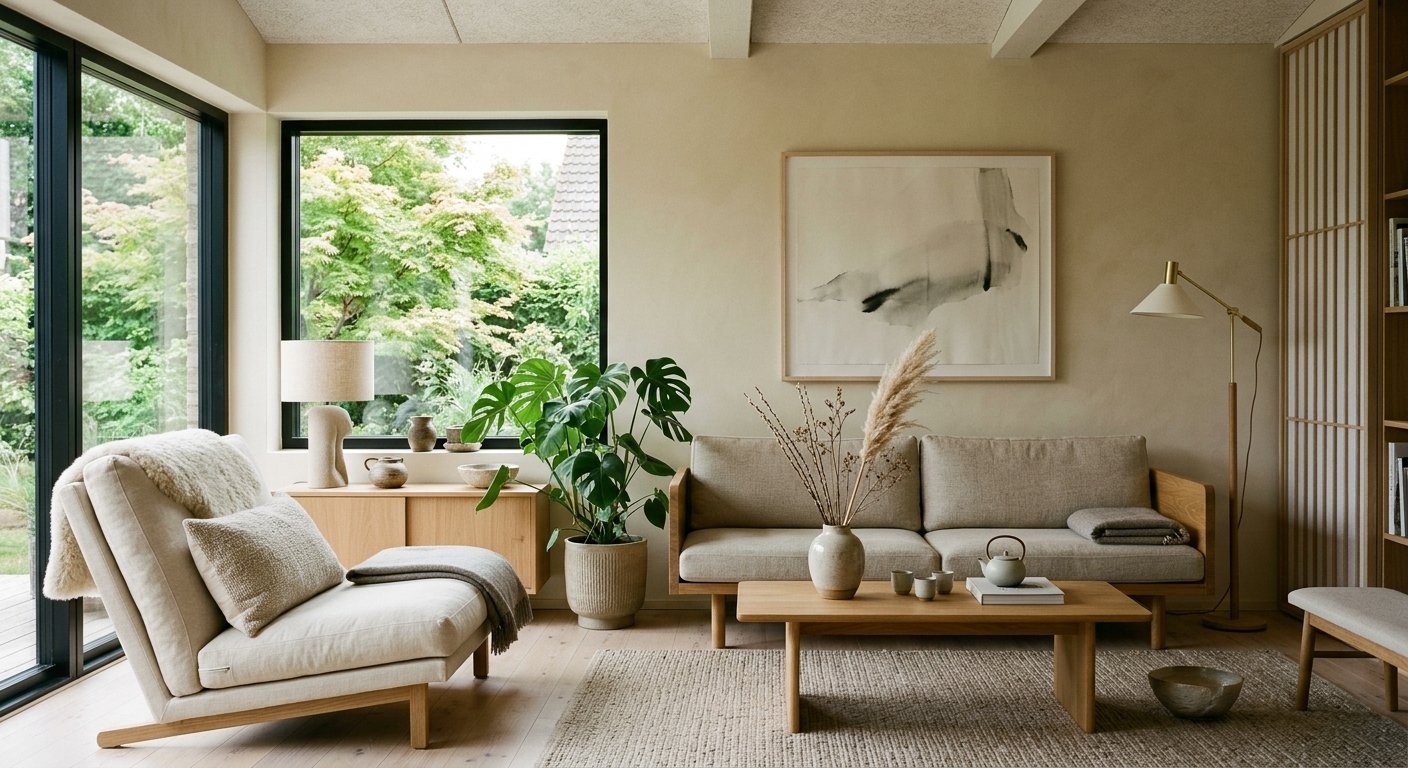
A comfortable home does not need expensive furniture or elaborate decorations to look beautiful. Sometimes, a thoughtful combination of natural materials, simple furniture, soft colors, and functional spaces can make a bigger difference. This is the idea behind Japandi Style, an interior design approach that blends Japanese minimalism with Scandinavian simplicity and comfort.
Japandi interiors typically feature natural wood, neutral colors, clean lines, practical furniture, and carefully selected decorations. Japanese design contributes an appreciation for craftsmanship, simplicity, and natural imperfections, while Scandinavian design emphasizes functionality, comfort, and everyday usability.
The best part is that you do not need to redesign your entire home to achieve this look. You can begin by organizing one room, choosing a coordinated color palette, or introducing a few natural textures.
What Is Japandi Style and Why Is It Popular?
Japandi Style combines elements of Japanese and Scandinavian interior design to create spaces that feel simple, warm, and practical. Rather than filling rooms with unnecessary decorations, this approach focuses on useful furniture, natural materials, balanced colors, and thoughtful layouts.
Its popularity comes partly from its flexibility. You can apply Japandi principles to a bedroom, living room, kitchen, or small apartment without following a rigid decorating formula.
The Origins of Japanese and Scandinavian Interior Design
Japanese and Scandinavian design traditions developed in different cultural settings, but both place importance on simplicity, craftsmanship, and the relationship between objects and their surroundings. Japanese interiors often emphasize restrained decoration and natural materials, while Scandinavian design is widely associated with practical furniture, clean forms, and comfortable living spaces.
The exchange of artistic and design ideas between Japan and Europe dates back to the nineteenth century. Japandi is a modern label for combining selected elements of these traditions rather than a traditional style belonging exclusively to either culture.
The Core Philosophy Behind Japandi Style
The central principle of Japandi Style is to make deliberate choices. Furniture should serve a purpose, decorations should complement the room, and materials should contribute to the overall atmosphere.
The Japanese concept of wabi-sabi is often associated with appreciating natural irregularities and imperfection. Scandinavian hygge is associated with comfort and coziness.
Why Japandi Style Works for Modern Homes
Modern homes often need to support several activities within limited space. A living room may become a reading area, while a dining table may also serve as a workspace.
Japandi Style encourages practical furniture, organized storage, and uncluttered layouts. These principles can help make rooms easier to use and maintain. The style is also adaptable because you can introduce its elements gradually instead of replacing everything at once.
What Are the Essential Elements of Japandi Style?
A successful Japandi interior combines simplicity, functionality, natural materials, and comfort. No single piece of furniture defines the style. Instead, the overall appearance develops through the relationship between the room’s colors, textures, furnishings, and available space.
Minimalism, Functionality, and Clean Lines
Minimalism means keeping what is useful or meaningful rather than removing everything from a room. Choose furniture with simple shapes, organize everyday belongings, and maintain clear walking routes.
A streamlined sofa, a practical coffee table, and a well-organized bookshelf can create a balanced living room without excessive decoration.
Natural Materials and Organic Textures
Wood, linen, cotton, stone, bamboo, and ceramics can introduce natural variation into Japandi interiors. Combining different textures adds interest without requiring many colors.
The Balance Between Simplicity and Comfort
A minimalist home should still feel welcoming. Comfortable seating, soft bedding, suitable lighting, and a few textured accessories can make a simple room more inviting.
Avoid removing useful furniture or everyday necessities simply to achieve an empty appearance. A successful design supports your lifestyle as well as your visual preferences.
Wabi-Sabi and the Beauty of Imperfection
Wabi-sabi encourages appreciation for natural variation, irregularity, and the passage of time. In interior design, this idea may appear through handmade pottery, visible wood grain, textured stone, and objects with individual character.
A slightly irregular ceramic bowl or a wooden stool with distinctive grain can add personality without making a room feel cluttered.
How to Choose the Perfect Japandi Style Color Palette
Color helps connect furniture, walls, textiles, and decorations. Japandi interiors commonly use warm neutrals, earthy shades, natural wood tones, and occasional darker accents.
Warm Whites, Creams, and Soft Beige
Warm white, ivory, cream, and beige provide a versatile foundation for walls, curtains, bedding, and upholstery. These shades work particularly well with wooden furniture and natural fabrics.
Test paint samples in your actual room before making a final decision. Daylight and artificial lighting can change how a color appears.
Earthy Browns, Muted Greens, and Natural Wood Tones
Muted green, warm brown, clay, and natural wood tones can introduce depth into a neutral interior. Consider adding sage-green cushions, a brown wooden table, or a simple ceramic accessory. Choose a main neutral and one or two supporting colors to maintain a consistent appearance.
Using Black and Charcoal for Subtle Contrast
Black and charcoal can create definition in a room dominated by lighter colors. A dark picture frame, lamp, or small decorative object may provide enough contrast without overwhelming the space.
How to Combine Colors Without Overwhelming a Room
Begin with the largest surfaces, including walls and flooring. Then select furniture colors and introduce smaller accents through textiles and accessories.
How to Select Furniture for a Japandi Style Home
Furniture should be comfortable, functional, and visually consistent. Japandi interiors often feature simple silhouettes, natural finishes, and practical designs that do not dominate the room.
Choosing Simple Wooden Furniture With Clean Lines
Wooden tables, shelves, cabinets, and bed frames can introduce warmth and natural texture. Look for uncomplicated designs that complement your existing furniture.
Matching every piece is unnecessary. Different wood tones can work together when their finishes and overall appearance feel balanced.
Low-Profile Sofas, Beds, and Coffee Tables
Low-profile furniture is often used in Japandi interiors because Japandi Style creates a grounded appearance. A low bed frame or streamlined sofa can help establish the desired look.
However, furniture height should suit your comfort, mobility, and storage requirements. Low furniture is an option, not a mandatory rule.
Natural Fabrics and Comfortable Upholstery
Linen, cotton, and other textured fabrics can soften the appearance of wooden furniture. Neutral cushions, simple curtains, and comfortable bedding introduce warmth without excessive decoration. Choose fabrics based on their durability, cleaning requirements, and everyday use.
Balancing Practicality, Quality, and Timeless Design
Measure your room before purchasing furniture. Check whether doors can open, drawers can extend, and people can move comfortably around each piece. Prioritize useful furniture that meets your needs. Existing or secondhand pieces may be suitable alternatives to expensive new purchases.
How to Create a Japandi Style Living Room
A Japandi living room should provide comfortable seating, practical storage, and enough open space for everyday activities.
Arrange Furniture for an Open and Balanced Layout
Place furniture according to how you use the room. Arrange seating for conversation, keep walkways clear, and avoid filling every corner with tables or accessories. A simple floor plan can help you test different arrangements before moving heavy furniture.
Combine Neutral Sofas With Wooden Accents
A beige, cream, or warm-gray sofa can work well with a wooden coffee table and understated shelving. If you already own a colorful sofa, keep it and introduce coordinating neutral accessories instead of replacing Japandi Style unnecessarily.
Layer Natural Textures for Warmth and Comfort
Combine a soft rug, wooden furniture, textured cushions, and a few ceramic accessories. Different materials create visual depth while maintaining a restrained color palette.
Keep Decorations Simple and Purposeful
Select a few objects that have practical or personal value. A vase, a framed print, or a small plant can provide character without crowding surfaces.
How to Design a Peaceful Japandi Style Bedroom
A Japandi bedroom should support rest, organization, and everyday comfort. Simple furniture and coordinated textiles can help establish a calm atmosphere.
Choose a Minimalist Bed Frame and Soft Bedding
A straightforward wooden bed frame paired with cream or beige bedding creates a versatile foundation. Add a simple throw or a few cushions if they improve comfort.
Use Natural Wood and Relaxing Neutral Colors
Wooden bedside tables and wardrobes can complement warm neutral walls. Choose finishes that work with your existing flooring and furnishings rather than purchasing an identical set.
Create a Calm Atmosphere With Soft Lighting
Combine general room lighting with bedside lamps for reading and relaxing. Choose fixtures that provide comfortable illumination for your daily activities.
Reduce Clutter for a More Restful Space
Keep frequently used belongings organized in drawers, wardrobes, or suitable baskets. Limit bedside items to what you actually need and maintain clear floor space wherever possible.
How to Bring Japandi Style Into Your Kitchen and Dining Area
A Japandi kitchen combines natural-looking finishes with practical storage and easy-to-use work surfaces.
Choose Natural Wood Cabinets and Simple Finishes
Wooden cabinets or wood-look finishes can add warmth to neutral kitchen surfaces. If replacing cabinets is too expensive, consider updating suitable hardware or introducing small wooden accessories.
Create a Functional and Clutter-Free Kitchen
Organize cooking tools and pantry supplies according to how frequently you use them. Keep essential items accessible while storing occasional-use equipment where Japandi Style does not occupy valuable worktop space.
Style the Dining Area With Minimalist Furniture
A simple wooden dining table and comfortable chairs can establish a cohesive look. Choose furniture that fits the room and allows people to move around the table easily.
Add Handmade Ceramics and Natural Table Accessories
Ceramic bowls, simple plates, wooden serving boards, and linen table textiles can add subtle character. Choose accessories that are useful as well as attractive.
How to Use Lighting to Enhance Japandi Style
Lighting affects both the appearance and functionality of a room. A combination of daylight, general illumination, and task lighting can make a Japandi interior more comfortable.
Maximize Natural Light Throughout the Home
Keep windows reasonably unobstructed and select window treatments that balance daylight with privacy. Arrange furniture to avoid unnecessarily blocking available light.
Choose Paper Lanterns and Minimalist Light Fixtures
Paper lanterns, understated pendants, and simple floor lamps can complement natural materials and clean lines. Choose fixtures that suit the room’s dimensions and meet applicable electrical safety requirements.
Use Warm Lighting to Create a Cozy Atmosphere
Warm-toned lighting can complement wood, beige walls, and natural textiles. Make sure the light remains suitable for reading, cooking, and other tasks.
Combine Ambient, Task, and Accent Lighting
Ambient lighting illuminates the room generally, task lighting supports specific activities, and accent lighting highlights selected features. Combine these functions according to the room’s needs rather than adding unnecessary fixtures.
How to Decorate a Japandi Style Home With Natural Accessories
Accessories should complement the room’s materials and colors without creating unnecessary clutter.
Incorporate Indoor Plants and Organic Shapes
Plants can introduce natural color and visual variation. Choose varieties that suit the available light and the time you can devote to care.
Add Linen, Cotton, Jute, and Woven Textures
Textiles and woven accessories can soften minimalist interiors. Consider linen curtains, cotton bedding, or a woven basket, while checking each material’s maintenance requirements.
Display Handmade Ceramics and Minimalist Artwork
A ceramic vase, simple artwork, or meaningful photograph can create a focal point. Select pieces that complement the room rather than competing for attention.
Choose Decorations That Have Meaning and Purpose
Decorate with objects you genuinely enjoy, use, or value. Leaving some surfaces empty allows selected items to remain visually distinct.
How to Create a Japandi Style Home on a Budget
Japandi Style does not require an expensive makeover. Start with existing furniture, thoughtful organization, and gradual improvements.
Declutter and Reuse Furniture You Already Own
Rearrange suitable furniture, repair useful items, and remove unnecessary belongings before shopping for replacements.
Choose Affordable Natural Materials and Textures
Look for affordable wooden accessories, cotton covers, ceramic pieces, and woven storage where available. Compare durability and maintenance rather than relying on appearance alone.
Try Simple DIY Decorating Projects
Consider updating suitable furniture hardware, repainting an appropriate accessory, or reorganizing shelves. Follow product instructions and use suitable safety precautions.
Prioritize Long-Lasting Furniture Over Trendy Items
Choose furniture according to comfort, construction, dimensions, and usefulness. Buy essential pieces first and add decorative items gradually.
How to Adapt Japandi Style for Small Spaces
Japandi principles can help compact homes feel more organized and functional when furniture and storage are selected carefully.
Use Multifunctional Furniture to Save Space
Storage beds, nesting tables, compact desks, and extendable dining tables can help meet multiple needs. Select pieces that fit your actual routines.
Keep the Layout Open and Visually Light
Limit oversized furniture and maintain clear walking routes. Choose pieces that fit the room instead of filling every available area.
Use Mirrors and Natural Light Strategically
A well-positioned mirror can reflect available daylight and create a greater sense of visual depth. Consider what the mirror reflects before deciding where to place Japandi Style.
Maintain a Minimalist Approach to Storage
Give frequently used objects accessible storage and keep occasional-use belongings organized elsewhere. Choose storage dimensions that suit the room.
Common Japandi Style Decorating Mistakes to Avoid
Making the Interior Feel Too Empty or Cold
Too much empty space, uncomfortable furniture, and a lack of texture can make a room feel unfinished. Introduce useful furnishings, soft textiles, and suitable lighting.
Mixing Too Many Colors and Competing Textures
Choose a coordinated palette and repeat a few materials throughout the room. Variation is useful when the elements complement one another.
Choosing Decorative Items Without a Purpose
Avoid purchasing accessories simply to fill empty surfaces. Choose objects that have practical value, personal meaning, or a clear design role.
Ignoring Comfort in Favor of Minimalism
Comfortable seating, useful storage, and adequate lighting matter more than following a strict visual formula. Adapt the design to your everyday needs.
Read more: Furniture Fair: Everything You Need to Know Before You Visit
Japandi Style vs. Scandinavian Style: Key Differences
Both styles value simplicity, functionality, and natural materials, but Japandi specifically combines Japanese design influences with Scandinavian principles.
Differences in Color Palettes and Materials
Japandi interiors often combine warm neutrals and earthy tones with understated Japanese-inspired details. Scandinavian interiors can use similar colors but also include a wider range of bright tones, patterns, and expressions depending on the design approach.
How Japanese Design Influences Japandi Interiors
Japanese influences may appear through restrained compositions, natural materials, low furniture, and appreciation for handmade objects. These features should be understood as inspirations rather than a complete representation of Japanese interior design.
Which Style Is Better for Your Home?
Neither style is universally better. Choose Japandi if you prefer an earthy palette and a blend of Japanese and Scandinavian influences. Choose a Scandinavian-inspired approach if its particular forms, colors, and functional features suit your preferences. You can also combine elements of both.
Final Thoughts
Creating a Japandi Style home is about combining simplicity, natural materials, functionality, and comfort in a way that suits your everyday life. You do not need expensive furniture or a complete renovation to begin.
Start with one room, organize what you already own, and choose colors and materials that complement one another. Introduce practical furniture, comfortable textiles, and carefully selected decorations as your budget allows.
Most importantly, treat Japandi as a flexible design approach rather than a rigid set of rules. The best result is a home that feels personal, functions well, and remains comfortable to live in long after the decorating is finished.
FAQs About Japandi Style
1. What Is the Main Concept of Japandi Style?
Japandi Style combines Japanese minimalism with Scandinavian functionality and comfort. It emphasizes natural materials, simple furniture, balanced colors, and purposeful decoration.
2. What Colors Are Best for a Japandi Style Home?
Warm white, cream, beige, earthy brown, muted green, and natural wood tones are useful choices. Small amounts of black or charcoal can provide contrast.
3. What Furniture Is Essential for Japandi Interiors?
There is no mandatory furniture list. A comfortable sofa, practical table, suitable bed, and functional storage are good starting points. Choose pieces according to your space and needs.
4. Can You Create a Japandi Style Home on a Budget?
Yes. Reuse furniture, declutter, introduce affordable natural textures, and improve lighting gradually. You can create a Japandi-inspired interior without replacing everything.
5. Is Japandi Style Suitable for Small Apartments?
Yes. Functional furniture, thoughtful storage, a restrained color palette, and clear walking routes can help small apartments feel organized and comfortable.
