

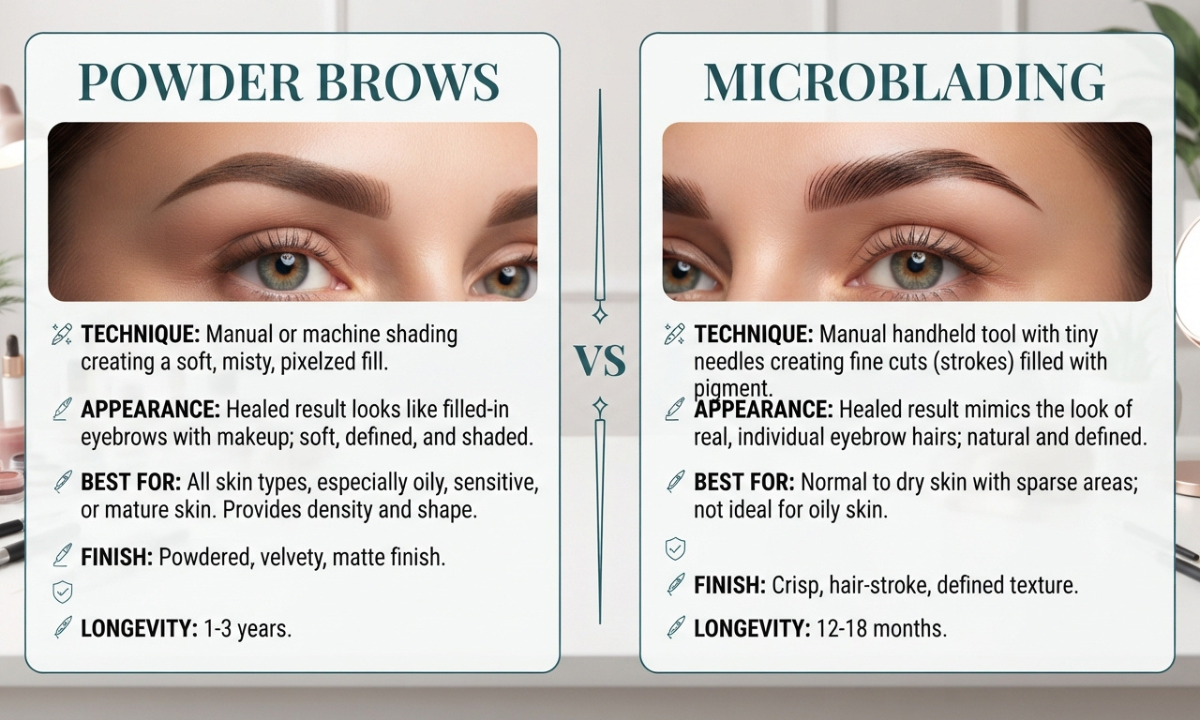
When comparing powder brows vs microblading, it can be difficult to know which technique fits your eyebrows, skin, and preferred look. Both procedures involve placing pigment into the skin, but they use different techniques to create different visual effects.
Microblading is designed to create individual hair-like strokes, while powder brows use a shading technique to produce a more filled-in, makeup-inspired appearance. Neither option is automatically right for everyone. Your skin characteristics, existing eyebrow hair, desired result, maintenance expectations, and the experience of the practitioner can all affect the outcome.
Powder brows vs microblading is also important to understand that these are forms of cosmetic tattooing rather than ordinary eyebrow makeup. Because the skin is penetrated and pigment is introduced into it, there are potential risks as well as cosmetic benefits.
What Are Powder Brows?
Powder brows are a cosmetic eyebrow pigmentation technique that creates a shaded appearance across the brow. The technique is commonly associated with microshading or an ombré-style brow, although terminology can vary between artists and salons.
Rather than trying to reproduce every individual eyebrow hair, the technique builds color through repeated pigment deposits. The finished effect can resemble brows filled in with powder or pencil, with the exact intensity depending on the practitioner, pigment, brow design, and healing response.
How Powder Brows Work
During a powder-brow procedure, a practitioner uses equipment designed for cosmetic pigmentation to place small amounts of pigment into the skin and gradually build the desired brow shape and density. The technique is different from microblading because the intended visual result comes primarily from shading rather than individual hair-like cuts or strokes.
The exact equipment and method can vary between practitioners. For that reason, someone considering powder brows should ask which technique will actually be used, what pigment is being applied, and what the expected healed result should look like.
What Do Powder Brows Look Like?
Powder brows are designed to give the eyebrows a more filled-in and shaded appearance. Depending on the technique, the result may be soft and subtle or more defined and makeup-like. Immediately after cosmetic pigmentation, the brows can look different from their eventual healed appearance. Freshly treated skin may be red or irritated, and the pigment can initially appear stronger before the area settles.
Looking at healed examples from the practitioner can therefore be more informative than judging only freshly completed photographs.
How Long Do Powder Brows Last?
There is no scientifically reliable expiration date that applies to every powder-brow treatment. Cosmetic tattoo pigment can become lighter or less visible over time, but fading does not mean the pigment has necessarily disappeared completely. Factors such as pigment characteristics, application technique, individual skin response, sun exposure, and skincare habits can influence how the result changes.
The FDA also warns that permanent makeup can fade or change and that pigment can sometimes migrate if it is deposited too deeply.
What Is Microblading?
Microblading is a cosmetic eyebrow tattooing technique intended to create the appearance of individual eyebrow hairs. A handheld tool with fine needles or a blade-like arrangement is used to create strokes in the skin, where pigment is deposited.
The technique became popular because the strokes are designed to follow the direction and pattern of natural brow hairs. Dermatology literature describes microblading as a form of eyebrow micropigmentation, while also documenting possible complications and the importance of proper technique and precautions.
How Microblading Works
The practitioner first plans the brow shape and then creates individual strokes intended to imitate natural eyebrow hairs. Pigment is introduced into the skin through those strokes. Because the procedure creates small breaks in the skin, it is not risk-free. Possible complications reported in the medical literature include infection, inflammatory reactions, pigment-related problems, scarring, and dissatisfaction with the cosmetic result.
What Do Microbladed Brows Look Like?
Microblading is designed to produce visible hair-like strokes rather than an entirely shaded brow. When performed appropriately, the strokes can create the visual impression of additional eyebrow hairs, especially in sparse areas. However, the healed appearance can differ from the initial result because pigment interacts with the skin and may fade or change over time.
This is why it is useful to review a practitioner’s healed work rather than relying exclusively on photographs taken immediately after a procedure.
How Long Does Microblading Last?
Microblading should not be treated as ordinary makeup that simply washes away. Pigment is placed into the skin, and some of it can remain even as the visible result becomes lighter. How long the brows remain visibly defined varies between individuals. Skin characteristics, pigment retention, technique, sun exposure, skincare, and other factors can affect fading.
Research has also examined complications and pigment behavior associated with eyebrow microblading, reinforcing the importance of realistic expectations rather than a guaranteed lifespan.
Powder Brows vs Microblading: What Is the Difference?
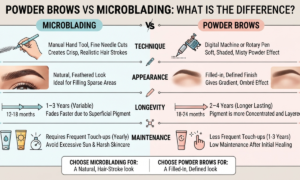
The main difference in powder brows vs microblading is the visual effect the practitioner is trying to create. Microblading uses individual hair-like strokes, whereas powder-style techniques use shading to create a filled or powdered appearance. Some practitioners also combine techniques, so consumers should confirm exactly what treatment they are purchasing rather than relying only on the name used in an advertisement.
Difference in Technique
Microblading focuses on individual strokes that are designed to resemble eyebrow hairs. Powder brows use repeated pigment deposits to create shading across the brow. The amount of shading can vary, and some designs use a softer front with more definition toward the tail. The terminology is not completely standardized across the beauty industry, so asking the practitioner to explain the exact technique is important.
Difference in Appearance
Microblading is intended to create a hair-stroke effect. Powder brows are intended to create a more shaded, filled-in appearance. Neither result should be described as permanently identical to natural eyebrow hair or makeup. Healing, fading, pigment characteristics, and individual skin response can change the appearance over time.
Difference in Longevity
Both techniques involve pigment placed into the skin, so neither should be described as something that simply disappears after a predictable period. The visible result can fade gradually, and some pigment may remain. The FDA notes that permanent makeup can fade, change, or become difficult to remove.
Difference in Maintenance
Both procedures may require future maintenance if the person wants to preserve the original appearance. The timing is not identical for every person because pigment retention varies. A responsible practitioner should assess the existing pigment before recommending another treatment rather than automatically adding more pigment at a fixed interval.
Powder Brows vs Microblading for Different Skin Types
Skin characteristics can affect how cosmetic brow pigment behaves. This is particularly relevant when discussing powder brows vs microblading because oily or sebaceous skin can influence the appearance and retention of microbladed strokes. However, skin type should not be treated as a simple rule that determines which treatment everyone should receive. A consultation is more useful than assuming that one technique is automatically appropriate for a particular skin category.
Powder Brows for Oily Skin
People with oily skin often ask whether powder brows are a better choice than microblading. Shading may be considered when someone wants a filled-in appearance, but there is not enough evidence to claim that powder brows are universally the correct option for every person with oily skin.
Microblading for Dry and Normal Skin
Microblading may behave differently depending on the skin’s characteristics. Hair-like strokes can lose definition or retain pigment differently in different individuals. Powder brows vs microblading would therefore be inaccurate to say that everyone with dry or normal skin is automatically an ideal candidate for microblading. Skin type is only one part of the assessment.
Why Skin Type Matters When Choosing a Brow Technique
Skin is not a passive surface. Oil production, healing, sun exposure, skincare habits, and other individual factors can affect cosmetic pigmentation. Recent dermatology literature discusses pigment retention and complications associated with eyebrow microblading and emphasizes appropriate technique and precautions.
Powder Brows vs Microblading: Which Looks More Natural?
There is no objective answer to which technique looks more natural. “Natural” can mean different things to different people. Someone may prefer the appearance of individual hairs, while another person may prefer a softly filled brow that resembles the way they normally use makeup.
The Soft, Makeup-Like Finish of Powder Brows
Powder brows are designed to create a shaded appearance. For someone who regularly fills in their brows with powder or pencil, this effect may look familiar because powder brows vs microblading resembles a makeup-filled brow rather than individual strands of hair.
The Hair-Stroke Effect of Microblading
Microblading is designed around individual hair-like strokes. This approach can be useful for someone who prefers the visual effect of separate brow hairs rather than an overall shaded area. However, “hair-like” does not mean the pigment will remain identical to natural hair indefinitely. Pigment can fade or change as the skin ages and responds to the treatment.
Choosing a Look That Matches Your Brow Goals
Instead of asking which treatment is naturally better, start by deciding what you want your eyebrows to look like. Ask yourself:
- Do you prefer visible hair-like strokes?
- Do you usually fill your brows with makeup?
- Do you want a softly shaded or more defined appearance?
- How much existing eyebrow hair do you have?
- Are you comfortable with a cosmetic tattoo procedure?
Looking at healed examples can help you compare the visual effect more realistically.
Powder Brows vs Microblading: Pain and Healing
Both procedures involve penetrating the skin, so some discomfort and a healing period should be expected. The amount of discomfort varies from person to person. The use of numbing products, the practitioner’s technique, and individual sensitivity can all influence the experience.
What the Procedures Feel Like
Microblading and powder-style pigmentation can cause sensations such as pressure, scratching, stinging, or discomfort. Powder brows vs microblading is better to describe these procedures as potentially uncomfortable than to promise that they are completely painless.
What to Expect During the Healing Process
After cosmetic brow pigmentation, the treated area can be temporarily red, swollen, tender, darker, or irritated. As the skin heals, the appearance can change. Some people experience dryness, flaking, or itching. Do not judge the final cosmetic result solely from the first day or two. Healing is part of the process, and individual responses differ.
Aftercare and Activities to Avoid
Aftercare instructions should come directly from the practitioner who performed the procedure because the appropriate instructions can depend on the technique and the condition of the treated skin. Generally, people should avoid picking or scratching healing skin. They should also follow professional instructions concerning water exposure, sweating, swimming, skincare products, and makeup.
If the area develops signs of infection or an unexpected reaction, medical advice should be sought rather than attempting to manage a serious complication with cosmetic products.
How Long Do Powder Brows and Microblading Last?
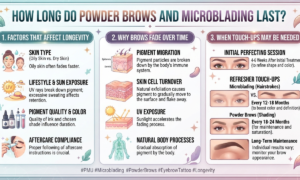
One of the most common mistakes in articles about powder brows vs microblading is giving a single number and presenting it as a guarantee. Cosmetic brow pigmentation can fade over time, but the result is affected by individual factors. The FDA considers permanent makeup a type of tattoo and notes that tattoo pigment can fade while still presenting difficulties when someone later wants powder brows vs microblading removed.
Factors That Affect Longevity
Factors that can influence the appearance of cosmetic brow pigment include:
- Skin characteristics
- Pigment and application technique
- Sun exposure
- Skincare and exfoliating treatments
- Individual healing response
- Previous cosmetic pigmentation
- Maintenance treatments
Microblading research also highlights the importance of understanding individual differences and potential complications.
Why Brows Fade Over Time
Cosmetic pigment does not necessarily remain visually identical forever. The skin changes with age, and environmental exposure can affect the appearance of pigment. The FDA notes that permanent makeup can fade and that pigment can sometimes migrate when powder brows vs microblading is placed too deeply.
When Touch-Ups May Be Needed
A touch-up may be considered when the original pigment has faded or when the person wants to adjust the appearance. However, more pigment is not always the answer. If existing pigment has become blurred, changed color, or migrated, adding additional pigment can complicate the result.
How Much Do Powder Brows and Microblading Cost?
There is no universal price for either procedure. Cost can vary by country, city, practitioner, technique, experience, and what is included in the treatment package.
Factors That Affect the Cost
Before comparing prices, find out what the quoted amount actually includes. For example, ask whether powder brows vs microblading covers the initial appointment, consultation, follow-up, touch-up, aftercare products, or correction work.
Touch-Up and Maintenance Costs
Future maintenance can add to the overall cost. Instead of asking only, “How much is the first appointment?” ask about the expected treatment plan and potential future costs. This gives you a more realistic idea of the financial commitment.
Why Prices Vary Between Brow Artists
Practitioners have different levels of training, experience, operating costs, and local pricing. However, price should not be the only factor used to select someone for a procedure that breaks the skin. Hygiene, training, licensing where applicable, pigment information, healed results, and clear communication about risks deserve equal attention.
Pros and Cons of Powder Brows vs Microblading
Both techniques have potential advantages and limitations. The right comparison depends on your personal goals rather than a universal ranking.
Pros and Cons of Powder Brows
Potential advantages include:
- Creates a shaded, filled-in appearance.
- Can resemble the look of eyebrow makeup.
- Allows the practitioner to build different levels of brow definition.
- Can be considered when someone prefers shading rather than individual hair strokes.
Potential limitations include:
- It is a skin-penetrating cosmetic procedure.
- Healing affects the early appearance.
- Pigment can fade or change over time.
- Complications such as infection, allergic reactions, scarring, and pigment problems are possible with cosmetic tattooing.
Pros and Cons of Microblading
Potential advantages include:
- Designed to create individual hair-like strokes.
- Can visually fill sparse areas.
- Allows the brow design to follow the direction of natural hair.
Potential limitations include:
- Results vary between individuals.
- Pigment retention can be affected by skin characteristics.
- Touch-ups may be needed.
- Medical literature has documented possible complications, including inflammatory reactions, infection, pigment-related problems, and scarring.
Important Factors to Consider Before Choosing
Before choosing between the two, consider:
- Your desired brow appearance
- Your existing eyebrow hair
- Your skin characteristics
- Your expectations about fading
- Your willingness to follow aftercare instructions
- The practitioner’s training and experience
- Hygiene and infection-control practices
- The possibility that you may eventually want the pigment removed
The last point is particularly important because tattoo and permanent-makeup removal can be difficult, expensive, and incomplete.
How to Choose Between Powder Brows and Microblading
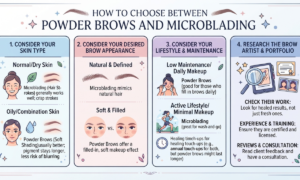
There is no single procedure that can honestly be called the best for everyone. The most useful approach is to match the technique with your preferred appearance and discuss your individual skin and brow characteristics with a qualified practitioner.
Consider Your Skin Type
Tell the practitioner whether your skin is oily, dry, sensitive, or prone to particular reactions. Skin characteristics can influence how pigment behaves, but they should be considered alongside other factors rather than used as the only reason to select a procedure.
Consider Your Desired Brow Appearance
If you prefer individual hair-like marks, microblading is specifically designed around that concept. If you prefer a filled or makeup-inspired appearance, powder-style shading may be closer to your goal.
Consider Your Lifestyle and Maintenance Preferences
Think about how often you spend time outdoors, how you care for your skin, and whether you are comfortable maintaining cosmetic pigmentation over time. You should also understand that changing your mind later may not be as simple as removing ordinary eyebrow makeup.
Research the Brow Artist and Their Portfolio
Do not choose a practitioner based solely on price or social-media popularity. Ask about training, licensing requirements in your location, hygiene practices, pigments, single-use equipment, and aftercare.
Read more : Thehometrotters Trisha: Meet the Team Behind the Innovation
What to Know Before Your Brow Appointment
A proper consultation should happen before the procedure, not after you have already committed to powder brows vs microblading. You should understand what will be done, what pigment will be used, what the expected healing process involves, and what complications are possible.
Questions to Ask Your Brow Artist
Before booking, consider asking:
- Which technique are you recommending?
- Why is that technique appropriate for my brows?
- Can I see healed examples of your work?
- What type of pigment will you use?
- Is the equipment single-use where appropriate?
- How are reusable instruments cleaned and sterilized?
- What happens if I am unhappy with the result?
- Is a touch-up included?
- What are the aftercare instructions?
- What should I do if I develop an unusual reaction?
These questions can help you understand both the cosmetic and safety aspects of the treatment.
How to Prepare for the Procedure
Preparation instructions can vary, so follow the practitioner’s specific guidance. Before treatment, disclose relevant information about previous cosmetic tattooing, allergies, medications, skin conditions, and any history of unusual scarring. If you have concerns about whether the procedure is appropriate for you, discussing them with a healthcare professional can provide additional guidance.
Safety, Hygiene, and Professional Qualifications
Safety should be one of the most important parts of the decision. The FDA warns that permanent makeup and tattooing can be associated with infections, allergic reactions, granulomas, keloid formation, scarring, and problems with removal. Contaminated inks can also cause infection even when hygienic procedures are followed.
Before treatment, confirm that the practitioner follows appropriate infection-control procedures and complies with the regulations that apply where the procedure is performed.
Final Thoughts on Powder Brows vs Microblading
The most important thing to understand about powder brows vs microblading is that the two techniques are designed to create different brow effects. Microblading focuses on individual hair-like strokes, while powder brows use shading to create a more filled-in appearance. Neither technique can guarantee a particular result for every person because healing, pigment behavior, skin characteristics, technique, and aftercare all influence the finished appearance.
Powder brows vs microblading is also important to look beyond the beauty trend. These procedures introduce pigment into the skin, making them forms of cosmetic tattooing. The FDA warns about potential complications such as infection, allergic reactions, scarring, pigment migration, and difficulties with removal.
FAQs Powder Brows vs Microblading
Are Powder Brows Better Than Microblading?
There is no universally better option; the right choice depends on your desired brow style, skin characteristics, and existing brows. Powder brows create a shaded effect, while microblading creates individual hair-like strokes.
Which Lasts Longer, Powder Brows or Microblading?
Neither has a guaranteed lifespan because pigment can fade or change differently from person to person. Skin characteristics, technique, pigment, sun exposure, and aftercare can all affect how long the results remain visible.
Are Powder Brows or Microblading Better for Oily Skin?
Oily skin may affect pigment retention, particularly with microblading, but powder brows are not automatically suitable for everyone with oily skin. A qualified practitioner should assess your skin and existing brows before recommending a technique.
Which Procedure Looks More Natural?
“Natural” depends on the appearance you want, since microblading creates hair-like strokes while powder brows create a soft, shaded effect. If you prefer the look of individual brow hairs, microblading may suit your goal, while powder brows may suit a filled-in appearance.
Can You Get Powder Brows After Microblading?
Powder brows may sometimes be considered after microblading, but existing pigment, color, density, and placement must be assessed first. If the previous pigment has changed or blurred, correction or removal may need to be considered before adding new pigment.
